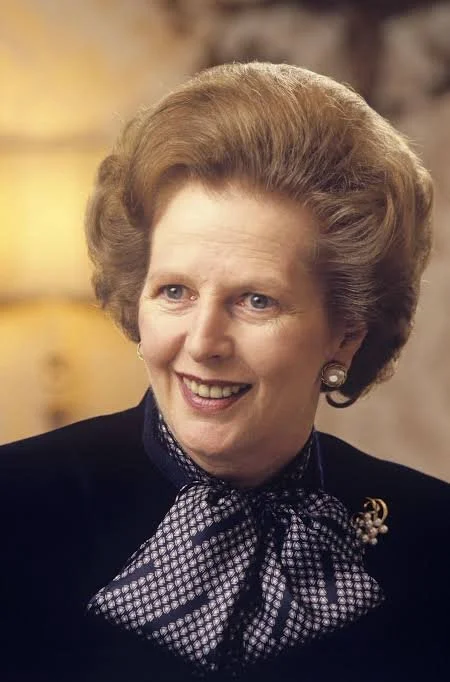
The dramatic story of a grocer's daughter who shattered political barriers, confronted powerful enemies and became one of Britain's most controversial prime ministers.
How did a grocer's daughter dream of ruling Britain?
Born in 1925 in Grantham, Lincolnshire, Margaret Roberts grew up above her father's grocery shop. Her upbringing was far from glamorous, but she was determined to make something of herself. Hard-working and ambitious, she won a place at Oxford University, studied chemistry and later qualified as a barrister. In 1951, she married Denis Thatcher, and in 1959 she became a Conservative MP. At a time when politics was dominated by men, Margaret refused to let prejudice hold her back. She was slowly climbing the political ladder, and her greatest battles were still ahead.
How did she earn the nickname "The Iron Lady"?
In 1970, Thatcher became Education Secretary, but her decision to end free school milk for most children aged seven to eleven sparked a public outcry. Critics nicknamed her "Thatcher, Thatcher, Milk Snatcher!" Yet the controversy did not put her off politics. In 1975, she became leader of the Conservative Party. A year later, after fiercely criticising the Soviet Union, she was dubbed the "Iron Lady" by a Soviet newspaper. Instead of taking offence, she turned the nickname to her advantage. Her reputation for determination was growing, and she was not someone who would easily back down.
How did she break through Britain's political glass ceiling?
By the late 1970s, Britain was struggling with inflation, strikes and economic uncertainty. Thatcher promised radical change, arguing that Britain needed less government intervention and greater individual responsibility. In May 1979, her Conservative Party won the general election, and she became Britain's first female prime minister. It was a historic turning point. However, her early years were anything but smooth sailing. Unemployment soared, factories closed and protests erupted. Even members of her own party urged her to change course, but Thatcher famously declared, "The lady's not for turning." She was determined to stick to her guns, whatever the consequences.
How did a distant war transform her political fortunes?
In April 1982, Argentine forces invaded the Falkland Islands, a British-controlled territory in the South Atlantic. Thatcher faced an enormous challenge: should Britain accept the occupation or fight back? She sent a naval task force thousands of miles across the ocean. The country held its breath as fierce battles unfolded. After ten weeks, Argentine forces surrendered, although hundreds of lives had been lost. The victory helped Thatcher turn the tide politically, strengthening her popularity before the Conservatives' landslide election victory in 1983.
Why did Thatcher lock horns with Britain's coal miners?
In 1984, the government's plans to close uneconomic coal mines triggered a bitter confrontation with the miners' union. Thousands of workers went on strike, determined to protect their jobs and communities. Families struggled to make ends meet, while clashes between police and protesters shocked the nation. Neither side was willing to give an inch. After almost a year, the miners returned to work without securing their main demands. Thatcher's government had prevailed, but the conflict left deep scars in industrial communities. To supporters, she had confronted powerful unions; to critics, her policies had devastated working-class livelihoods.
How did the Iron Lady survive an assassination attempt?
In October 1984, a bomb planted by the Provisional IRA exploded at the Grand Hotel in Brighton, where Thatcher was attending the Conservative Party conference. Five people were killed, and many others were injured. Thatcher narrowly escaped with her life. Despite the devastation, she insisted that the conference should go ahead and delivered her speech the following morning. Her refusal to be intimidated reinforced her image as the Iron Lady. She had survived one of the most terrifying nights of her political career.
How aid her closest allies bring about her downfall?
By 1990, trouble was brewing beneath the surface. Thatcher's unpopular poll tax had sparked widespread protests, while disagreements over Europe were tearing her party apart. When Michael Heseltine challenged her leadership, Thatcher initially vowed to fight on. However, after discovering that many senior colleagues no longer supported her, she reluctantly stepped aside. On 28 November 1990, she left Downing Street, visibly emotional. After more than eleven years in power, the woman famous for refusing to surrender had been brought down by members of her own party. It was a dramatic fall from grace.
What legacy did the Iron Lady leave behind?
After leaving office, Thatcher continued to influence political debate until her death in 2013, aged eighty-seven. Her policies had transformed Britain through privatisation, trade union reforms and an emphasis on free markets. Supporters praised her economic reforms and determination, while critics pointed to rising inequality and the decline of industrial communities. Her legacy remains deeply divisive. Yet one fact is beyond dispute: the grocer's daughter from Grantham had broken through the glass ceiling and changed the course of British political history. Decades later, arguments about her achievements and failures continue to rage on.
This is a list of key vocabulary and expressions from the article in order of how useful they are. The student must choose 6 items from the list to study in the lesson.
To put (someone) off
Definition: To discourage someone from doing something or make them lose interest in it.
Example: The negative comments didn't put her off pursuing a career in politics.
To surrender
Definition: To stop fighting or resisting and admit defeat.
Example: The soldiers were ordered to surrender after weeks of fierce fighting.
Scar
Definition: A mark left on the skin after an injury, or lasting emotional damage caused by a painful experience.
Example: The bitter conflict left deep scars on the local community.
Beyond
Definition: Further than a particular place, point or limit; outside the range of something.
Example: Her achievements went far beyond what anyone had expected.
To go on strike
Definition: To stop working as a form of protest, usually to demand better pay or working conditions.
Example: Thousands of miners went on strike to protest against the closure of coal mines.
Praise
Definition: To express admiration or approval of someone or something.
Example: Her supporters praised her for standing up to powerful opponents.
Despite
Definition: Without being prevented by something; even though something happens or is true.
Example: Despite fierce criticism, she refused to change her policies.
To hold (someone/something) back
Definition: To prevent someone or something from making progress or achieving their full potential.
Example: She refused to let her background or gender hold her back.
To intimidate (someone)
Definition: To frighten or threaten someone in order to make them do what you want.
Example: The protesters refused to be intimidated by the threats.
To soar
Definition: To rise or increase very quickly to a high level.
Example: Unemployment soared during the economic crisis.
Clash
Definition: A serious disagreement, argument or violent confrontation between people or groups.
Example: Violent clashes broke out between police and protesters.
To shatter (something/someone)
Definition: To break something into pieces or completely destroy someone's hopes, confidence or beliefs.
Example: The unexpected defeat shattered his dreams of becoming prime minister.
To stick to your guns
Definition: To refuse to change your opinions or decisions, even when other people strongly disagree with you.
Example: Despite enormous pressure from her advisers, Thatcher stuck to her guns.
To make ends meet
Definition: To have just enough money to pay for basic living expenses.
Example: Many families struggled to make ends meet after losing their jobs.
Smooth/plain sailing
Definition: A situation or period in which everything goes well without difficulties or problems.
Example: Her first few years as prime minister were anything but smooth sailing.
To be reluctant (to do something)
Definition: To be unwilling or hesitant to do something, often because you have doubts or concerns.
Example: She was reluctant to step down, even when her colleagues urged her to resign.
To turn the tide
Definition: To change a difficult or unsuccessful situation so that it begins to improve or become successful.
Example: The military victory helped turn the tide in her political favour.
To vow (to do something)
Definition: To make a serious or determined promise to do something.
Example: She vowed to fight on despite growing opposition within her own party.
To give an inch
Definition: To make even a small concession or compromise, especially during an argument or negotiation.
Example: Neither side was prepared to give an inch during the negotiations.
To rage on
Definition: To continue with great intensity, especially when referring to conflicts, arguments or debates.
Example: The debate over her controversial policies continues to rage on decades later.
Outcry
Definition: A strong public expression of anger, shock or disapproval.
Example: The government's decision to close the factories sparked a nationwide outcry.
A fall from grace
Definition: A situation in which someone loses their power, reputation or respected position, often suddenly.
Example: The prime minister's resignation marked a dramatic fall from grace.
To lock horns (with someone)
Definition: To argue or fight with someone because you strongly disagree about something.
Example: Thatcher frequently locked horns with trade union leaders over economic reforms.
To be dubbed (something)
Definition: To be given a particular name or nickname, usually by the media or the public.
Example: Margaret Thatcher was dubbed the Iron Lady because of her uncompromising political style.
A landslide election victory
Definition: An election victory in which a party or candidate wins by a very large margin.
Example: The Conservative Party secured a landslide election victory in 1983.
Conversation-provoking questions related to the article.
How did a grocer's daughter dream of ruling Britain?
How did she earn the nickname "The Iron Lady"?
How did she break through Britain's political glass ceiling?
How did a distant war transform her political fortunes?
Why did Thatcher lock horns with Britain's coal miners?
How did the Iron Lady survive an assassination attempt?
How did her closest allies bring about her downfall?
What legacy did the Iron Lady leave behind?
Should we build a statue of Maggie Thatcher in Parliament Square?
What do you admire about Thatcher?
What do you not like about Thatcher?
Would the world be a better place with more female leaders?
Are you in a constant battle with your children to try to raise their ambitions?
In your native country, would it be more difficult for a woman to progress in politics than it is for a man?
Did you use to receive milk in school?