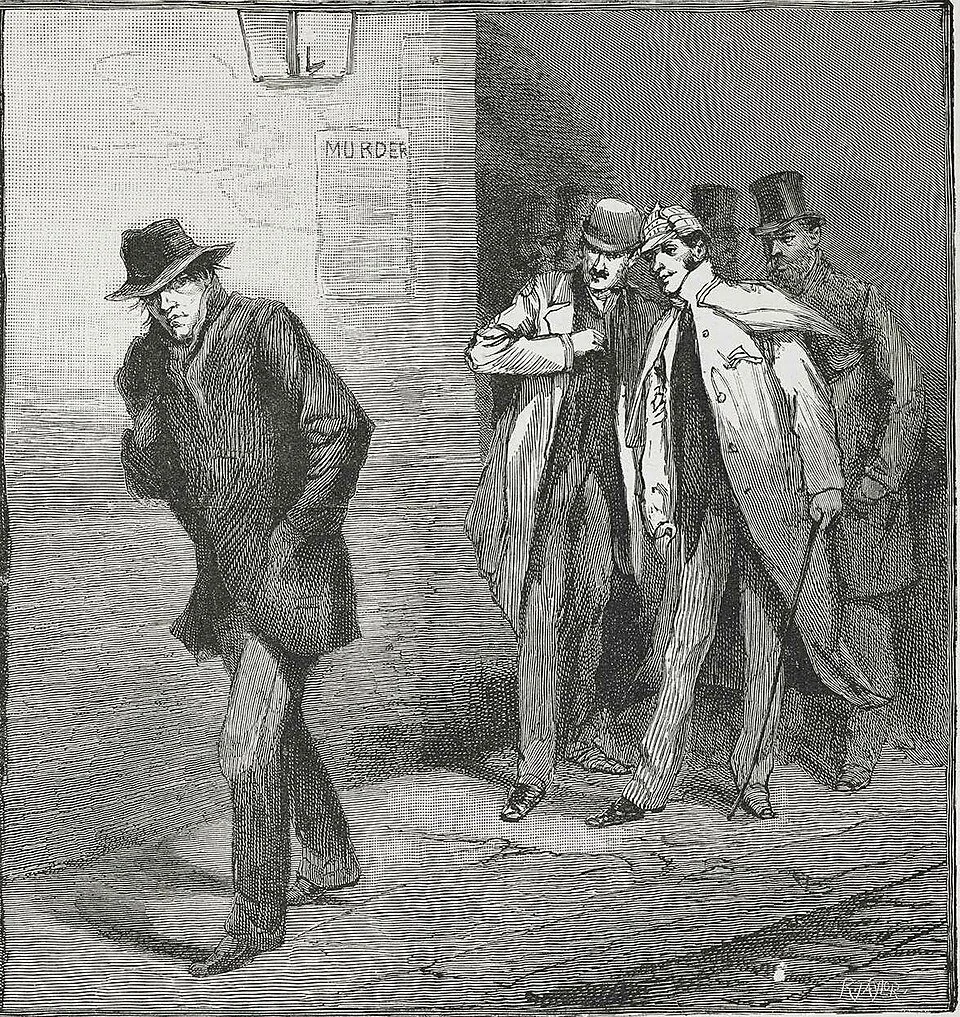
London, 1888. Five women were murdered, a city was gripped by fear, and a mysterious killer became a legend. But the crimes also exposed the darker side of Victorian society.
Why was London's East End a disaster waiting to happen?
In 1888, Britain was one of the wealthiest countries in the world, but not everyone was enjoying the benefits. While the upper classes lived in luxury, thousands of people in London's East End were struggling to make ends meet. Overcrowded housing, unemployment and disease were rife, and many women had to scrape together a few pennies each night just to afford a bed.
Whitechapel was particularly notorious for its poverty. People who couldn't afford accommodation often ended up sleeping rough, and women had limited opportunities to earn a decent living. It was against this grim backdrop that a mysterious murderer began targeting vulnerable women.
Who were the women behind the headlines?
The first widely recognised victim was Mary Ann Nichols, a 43-year-old mother of five whose marriage had fallen apart. Struggling with alcohol and poverty, she was murdered on 31 August 1888. Just over a week later, Annie Chapman, 47, was found dead. She too had experienced family tragedy and had fallen on hard times.
Then, on 30 September, the killer apparently struck twice in one night. Elizabeth Stride, a Swedish immigrant, and Catherine Eddowes, a woman who had spent years trying to stay afloat financially, were murdered within an hour of each other. Finally, on 9 November, Mary Jane Kelly, believed to be just 25, was brutally killed in her rented room.
These women were often dismissed by the press as prostitutes, although the evidence about their lives and occupations is more complicated. Their stories revealed an uncomfortable truth: in Victorian Britain, falling on hard times could leave a woman dangerously exposed, with little support to fall back on.
How did the newspapers turn a murderer into a celebrity?
As news of the killings spread like wildfire, London was thrown into a state of panic. Newspapers competed to publish the most shocking details, and sensational headlines helped sales soar. A mysterious letter signed "Jack the Ripper" gave the killer his infamous nickname, although its authenticity remains doubtful.
The press added fuel to the fire by circulating rumours about suspects, gruesome details and supposed sightings. Some readers were horrified, while others became fascinated by the mystery. The killer was rapidly turning into a household name.
Ironically, while newspapers devoted enormous attention to the murderer, the victims' lives were often pushed into the background. It was an early example of a problem that still exists today: when does reporting crime cross the line into entertainment?
Why did the murders expose Britain's class divisions?
The killings sparked outrage, but they also raised an awkward question: why had conditions in Whitechapel been ignored for so long?
Middle-class reformers, journalists and campaigners began drawing attention to the appalling living conditions in the East End. For years, poverty had been treated as a problem of individual laziness or bad behaviour. Now, the murders helped bring overcrowding, homelessness and inequality into sharp focus.
Some commentators argued that society had turned a blind eye to the suffering of the poor until a sensational crime forced the issue into the spotlight. The murders did not create Britain's social problems; they simply made them harder to ignore.
Who did the public blame when the police failed?
With the murderer still on the loose, frustration began to boil over. Residents organised patrols, and the Whitechapel Vigilance Committee was formed to pressure the authorities and help catch the killer.
Unfortunately, fear also brought out the worst in people. Some newspapers and members of the public pointed the finger at Jewish immigrants, spreading antisemitic rumours without evidence. In a neighbourhood already struggling with poverty and tension, foreigners became convenient scapegoats.
The police were caught between a rock and a hard place. They faced enormous public pressure but lacked modern forensic techniques. Despite interviewing suspects and following numerous leads, they never managed to get to the bottom of the mystery.
What can Jack the Ripper teach us about society today?
More than a century later, the killer's identity remains unknown. Yet the story raises questions that are surprisingly relevant today. Why are some victims treated as more deserving of sympathy than others? Why do people look for scapegoats during a crisis? And why are we so fascinated by violent criminals?
The murders also reveal how poverty, gender inequality, sensationalist journalism and prejudice can become dangerously intertwined.
Jack the Ripper may have got away with murder, but perhaps the greatest injustice is that his name has gone down in history while the women he killed are so often forgotten.
The real mystery isn't just who Jack the Ripper was. It's why society paid so much attention to the killer and so little to the circumstances that left his victims vulnerable.
This is a list of key vocabulary and expressions from the article in order of how useful they are. The student must choose 6 items from the list to study in the lesson.
Wealthy
Having a lot of money, property, or valuable possessions.
Example: While wealthy Londoners lived in luxury, many people in Whitechapel struggled to survive.
Awkward
Difficult, uncomfortable, or embarrassing to deal with.
Example: The journalist asked the politician some awkward questions about poverty.
Brutal
Extremely violent, cruel, or harsh.
Example: The brutal murders shocked the entire city.
Gruesome
Extremely unpleasant or shocking, especially because of blood, injury, or death.
Example: Newspapers published gruesome details of the crimes to attract readers.
Spark
To cause something to begin, especially a reaction, discussion, or conflict.
Example: The murders sparked a heated debate about poverty and public safety.
To soar
To increase very quickly or rise to a very high level.
Example: Newspaper sales soared as the public became obsessed with the mysterious killer.
To make ends meet
To earn just enough money to pay for basic living expenses.
Example: Many Victorian families worked long hours just to make ends meet.
To turn a blind eye (to something)
To deliberately ignore something wrong or unpleasant, even though you know it is happening.
Example: The authorities had turned a blind eye to the terrible living conditions in London's poorest neighbourhoods.
To boil over
To reach a point where strong emotions, especially anger or frustration, can no longer be controlled.
Example: Public frustration boiled over when the police failed to catch the murderer.
To be gripped
To be strongly affected or completely absorbed by an emotion, event, or situation.
Example: London was gripped by fear as rumours of another murder spread.
Grim
Extremely serious, depressing, or unpleasant, often with little hope of improvement.
Example: Life was grim for thousands of people living in overcrowded Victorian slums.
To fall apart
To break down, collapse, or stop functioning properly, especially a relationship, plan, or situation.
Example: After losing her job and separating from her husband, her life began to fall apart.
Appalling
Extremely bad, shocking, or unacceptable.
Example: Social reformers were horrified by the appalling conditions in London's East End.
To spread like wildfire
To spread extremely quickly among a large number of people.
Example: Rumours about the killer's identity spread like wildfire throughout London.
Rife
Very common or widespread, especially when referring to something negative.
Example: Disease, unemployment, and crime were rife in some of London's poorest districts.
To sleep rough
To sleep outdoors because you have nowhere to live.
Example: Many homeless people were forced to sleep rough in the streets of Victorian London.
To get away with murder
To escape punishment for murder; informally, to behave very badly without facing any consequences.
Example: Despite the enormous police investigation, Jack the Ripper appeared to have got away with murder.
Scapegoat
A person or group unfairly blamed for problems or wrongdoing, often to protect those actually responsible.
Example: Jewish immigrants became scapegoats as frightened Londoners searched for someone to blame.
To add fuel to the fire
To make an already difficult, tense, or unpleasant situation even worse.
Example: Sensational newspaper reports added fuel to the fire by spreading frightening rumours.
To scrape (something) together
To manage to collect enough money or resources with great difficulty.
Example: Some women struggled to scrape together enough money to pay for a bed each night.
To be on the loose
To be free and not captured, especially when referring to a dangerous person or escaped criminal.
Example: Residents were terrified because they knew a ruthless murderer was still on the loose.
A household name
A person, brand, or organisation that is extremely famous and widely recognised.
Example: Jack the Ripper became a household name because of the enormous media attention surrounding the murders.
To stay afloat
To manage to survive financially or avoid failure during a difficult period.
Example: Many families took on extra work to stay afloat during periods of unemployment.
Between a rock and a hard place
In a difficult situation where you must choose between two equally unpleasant options.
Example: The police were caught between a rock and a hard place: they needed to reassure the public but had very few reliable clues.
To fall on hard times
To experience a period of financial difficulty or misfortune, especially after previously being in a better situation.
Example: After her marriage broke down, Annie Chapman fell on hard times and struggled to support herself.
Conversation-provoking questions related to the article.
1. Why was London’s East End a disaster waiting to happen?
2. Who were the women behind the headlines?
3. How did the newspapers turn a murderer into a celebrity?
4. Why did the murders expose Britain’s class divisions?
5. Who did the public blame when the police failed?
6. What can Jack the Ripper teach us about society today?
7. Do you think that some victims of crime are treated as more important than others?
8. Did the press do anything wrong in this case?
9. Do you watch a lot of movies, series and documentaries about murder and crime?
10. Do you see examples of extreme wealth/ poverty where you live today?
11. Can you think of any examples of scapegoating from your native country?
12. Does your native city have slums?
13. Have you ever had an experience involving the police (that you would be comfortable talking about!)?
14. What are the crimes that worry people the most in your native country?
15. Would you make a good detective?