1858–1928
Imagine living in a country where women could work, pay taxes and raise families, yet were denied the right to vote simply because of their sex. In Victorian Britain, politics was considered a man's world, and women were expected to know their place. However, one remarkable woman was determined to challenge the status quo. Her name was Emmeline Pankhurst, and she would become one of the most influential campaigners in British history.
Where did Emmeline's remarkable journey begin?
Emmeline Goulden was born on 15 July 1858 in Manchester, a bustling industrial city where enormous wealth existed alongside appalling poverty. Her parents were politically active and supported women's rights. From an early age, Emmeline was exposed to discussions about injustice and inequality, and she began to question why women were treated as second-class citizens.
According to a story from her childhood, her father once remarked that it was a pity she had not been born a boy. Such attitudes were commonplace in Victorian society, but Emmeline would spend much of her life fighting against them. At just 14, she attended a meeting about women's suffrage with her mother. The passionate speeches made a lasting impression on her and set her on a path that would eventually change British history.
Did marriage and motherhood put an end to her ambitions?
In 1879, Emmeline married Richard Pankhurst, a lawyer who strongly supported women's rights. Although he was considerably older, they saw eye to eye on political issues. Unlike many Victorian husbands, Richard encouraged his wife to pursue her ambitions rather than concentrate exclusively on domestic responsibilities.
The couple had five children, although one died in childhood. Despite the demands of motherhood, Emmeline remained politically active and became increasingly concerned about the dreadful living conditions of Manchester's poorest families.
Tragedy struck in 1898 when Richard died suddenly, leaving Emmeline heartbroken and struggling financially. She could have abandoned her political ambitions, but instead she threw herself into campaigning with renewed determination.
Why did she lose patience with peaceful campaigning?
For decades, women had organised meetings, written letters and collected signatures demanding the right to vote. However, their appeals repeatedly fell on deaf ears. Emmeline became convinced that politicians were merely paying lip service to women's concerns while doing little to bring about meaningful change.
In 1903, she established the Women's Social and Political Union (WSPU). Its members became known as the suffragettes, and their famous motto was "Deeds, not words." Emmeline wanted to shake things up and force politicians to sit up and take notice.
The suffragettes organised demonstrations, disrupted political meetings and deliberately broke the law. Some smashed windows, chained themselves to railings and even carried out arson attacks. These tactics caused a public outcry. While supporters admired their courage, critics accused them of going too far. Emmeline, however, refused to back down.
How did she become such a formidable opponent?
Emmeline soon became a household name. Her powerful speeches, iron will and willingness to confront authority inspired thousands of women. She was arrested repeatedly, but imprisonment did little to dampen her spirits.
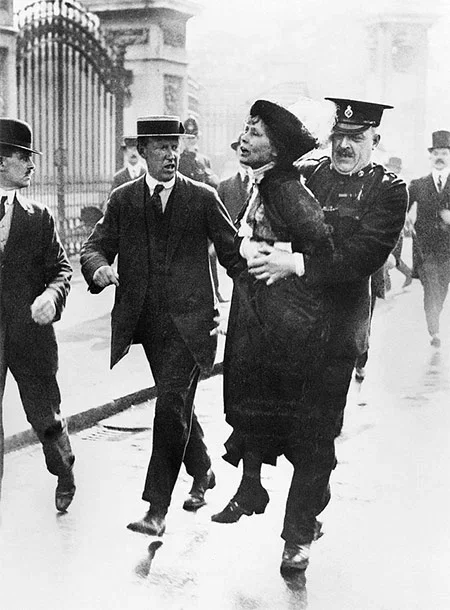
In 1914, she attempted to present a petition to King George V outside Buckingham Palace. Police officers intervened, and a photograph of her being seized became one of the most famous images of the suffragette movement.
Emmeline possessed neither great wealth nor political authority. Her strength lay in her extraordinary determination and ability to rally people behind a cause. She was prepared to sacrifice her own freedom in the pursuit of equality.
What terrible experiences did she endure in prison?
The authorities hoped that imprisonment would discourage the suffragettes. Instead, many prisoners went on hunger strike to protest against their treatment. Emmeline herself refused food during her imprisonments.
The government responded by force-feeding some hunger strikers, a painful and dangerous procedure that provoked widespread condemnation. Although Emmeline was threatened with force-feeding, she was never subjected to it.
In 1913, the government introduced the Cat and Mouse Act, allowing dangerously weak prisoners to be temporarily released and then rearrested once they had recovered. Rather than putting an end to the protests, this policy added fuel to the fire and generated further sympathy for the campaigners.
Did everyone agree with her methods?
Far from it. Many supporters of women's suffrage believed that violence and destruction would do more harm than good. Even Emmeline's family became divided over the movement's increasingly radical approach.
Her daughter Christabel remained a loyal supporter, but Sylvia believed that the campaign should also address poverty and working-class inequality. Another daughter, Adela, also fell out with the movement's leadership. These disagreements drove a wedge between family members.
Although Emmeline was undeniably courageous, she could also be stubborn and uncompromising. Her single-minded determination was both her greatest strength and a source of controversy.
How did the First World War change everything?
When Britain entered the First World War in 1914, Emmeline made a surprising decision. She suspended the militant suffrage campaign and threw her support behind the British war effort.
As millions of men went off to fight, women stepped in to fill the gaps. They worked in factories, hospitals, transport and agriculture, demonstrating that they could take on responsibilities previously reserved for men.
Their contribution helped transform public attitudes towards women's capabilities. Nevertheless, the eventual achievement of voting rights was also the result of decades of tireless campaigning.
Did Emmeline finally achieve her dream?
In 1918, Parliament passed the Representation of the People Act, granting millions of British women the right to vote for the first time. It was a landmark achievement, but there was a catch: women generally had to be at least 30 and meet certain qualifications, while most men could vote at 21.
Complete equality was still some way off. Nevertheless, Emmeline had witnessed a major breakthrough after years of protests, arrests and personal sacrifice. In her later years, she continued her political activities and eventually joined the Conservative Party.
Did she live to see complete equality?
Sadly, Emmeline died on 14 June 1928, aged 69. In a remarkable twist of fate, Parliament passed the Equal Franchise Act less than three weeks later, on 2 July 1928. This finally gave women the right to vote on the same terms as men, at the age of 21.
The victory she had fought for throughout her adult life arrived just too late for her to celebrate it.
Why is Emmeline Pankhurst still remembered today?
Emmeline Pankhurst played a pivotal role in transforming women's political rights in Britain. She challenged deeply entrenched prejudices and inspired thousands of women to stand their ground against discrimination.
Her militant methods remain controversial, and historians still debate whether they accelerated or complicated the struggle for women's suffrage. Nevertheless, her determination helped make women's exclusion from politics impossible to ignore.
Today, a statue of Emmeline stands in Manchester, the city where her extraordinary journey began. She was born into a society where women's political inequality was taken for granted, but by the time she died, that society had changed beyond recognition.
Emmeline Pankhurst did not live to see complete voting equality, but she helped pave the way for it. Her remarkable life demonstrates how courage, conviction and perseverance can change the course of history.
This is a list of key vocabulary and expressions from the article in order of how useful they are. The student must choose 6 items from the list to study in the lesson.
𝗛𝗼𝘄𝗲𝘃𝗲𝗿
Definition: Used to introduce a statement that contrasts with something previously said.
Example: She was very tired. However, she decided to continue working.
𝗔𝗰𝗰𝗼𝗿𝗱𝗶𝗻𝗴 𝘁𝗼 (𝘀𝗼𝗺𝗲𝗼𝗻𝗲/𝘀𝗼𝗺𝗲𝘁𝗵𝗶𝗻𝗴)
Definition: Used to say where information comes from or whose opinion is being reported.
Example: According to the weather forecast, it will rain tomorrow.
𝗧𝗼 𝘁𝗵𝗿𝗲𝗮𝘁𝗲𝗻 (𝘀𝗼𝗺𝗲𝗼𝗻𝗲)
Definition: To tell someone that you will hurt them or cause them problems if they do not do what you want.
Example: The man threatened to call the police if the teenagers didn't leave his property.
𝗧𝗼 𝘁𝗿𝗲𝗮𝘁 (𝘀𝗼𝗺𝗲𝗼𝗻𝗲)
Definition: To behave towards someone in a particular way, either well or badly.
Example: My new colleagues have treated me very well since I started working there.
𝗗𝗲𝘀𝗽𝗶𝘁𝗲
Definition: Used to show that something happens or is true even though there is a difficulty or something that might prevent it. It is followed by a noun, pronoun or -ing form.
Example: Despite the heavy rain, we decided to go for a walk.
𝗩𝗶𝗼𝗹𝗲𝗻𝗰𝗲
Definition: Behaviour involving physical force that is intended to hurt people or damage things.
Example: The demonstration began peacefully but eventually turned into violence.
𝗦𝘁𝘂𝗯𝗯𝗼𝗿𝗻
Definition: Unwilling to change your mind or behaviour, even when other people try to persuade you.
Example: My grandfather is so stubborn that he refuses to admit when he is wrong.
𝗪𝗶𝗱𝗲𝘀𝗽𝗿𝗲𝗮𝗱
Definition: Existing or happening in many places or affecting a large number of people.
Example: The government's decision caused widespread anger across the country.
𝗧𝗼 𝗰𝗮𝗿𝗿𝘆 (𝘀𝗼𝗺𝗲𝘁𝗵𝗶𝗻𝗴) 𝗼𝘂𝘁
Definition: To do or complete a task, plan, instruction or activity.
Example: The police carried out a detailed investigation into the incident.
𝗗𝗿𝗲𝗮𝗱𝗳𝘂𝗹
Definition: Extremely bad, unpleasant or serious.
Example: We had dreadful weather during our holiday, so we spent most of the time indoors.
𝗦𝗵𝗲 𝗰𝗼𝘂𝗹𝗱 𝗵𝗮𝘃𝗲 𝗮𝗯𝗮𝗻𝗱𝗼𝗻𝗲𝗱
Definition: The structure "could + have + past participle" is used to talk about something that was possible in the past but did not actually happen. "She could have abandoned" means that she had the possibility of giving something up, but she chose not to. The structure can also express uncertainty about whether something happened in the past, depending on the context.
Example: She could have abandoned her political career after her husband's death, but she decided to carry on fighting for women's rights.
𝗔 𝗽𝗶𝘁𝘆
Definition: A situation that causes disappointment or sadness, especially because something good has not happened.
Example: It's a pity you couldn't come to the party. We had a wonderful time.
𝗧𝗼 𝗳𝗮𝗹𝗹 𝗼𝘂𝘁 (𝘄𝗶𝘁𝗵 𝘀𝗼𝗺𝗲𝗼𝗻𝗲)
Definition: To have an argument or serious disagreement with someone, often resulting in a damaged relationship.
Example: She fell out with her best friend over a misunderstanding, and they haven't spoken for months.
𝗡𝗲𝘃𝗲𝗿𝘁𝗵𝗲𝗹𝗲𝘀𝘀
Definition: Despite what has just been mentioned; used to introduce a contrasting fact or situation. It is similar to "however" but often sounds slightly more formal.
Example: The journey was long and exhausting. Nevertheless, we thoroughly enjoyed our holiday.
𝗕𝘂𝘀𝘁𝗹𝗶𝗻𝗴
Definition: Full of people, movement and activity, often in a lively and exciting way.
Example: We spent the afternoon exploring the bustling streets of central London.
𝗔𝗽𝗽𝗮𝗹𝗹𝗶𝗻𝗴
Definition: Extremely bad, shocking or unacceptable.
Example: The conditions in the factory were appalling, and the workers demanded improvements.
𝗔 𝗰𝗮𝘁𝗰𝗵
Definition: A hidden problem, disadvantage or condition in something that initially seems attractive or beneficial.
Example: The hotel was offering rooms at half price, but there was a catch: breakfast and parking were not included.
𝗧𝗼 𝘀𝗲𝗲 𝗲𝘆𝗲 𝘁𝗼 𝗲𝘆𝗲 (𝗼𝗻 𝘀𝗼𝗺𝗲𝘁𝗵𝗶𝗻𝗴)
Definition: To agree with someone about a particular subject or issue.
Example: My brother and I don't always see eye to eye on politics, but we respect each other's opinions.
𝗧𝗼 𝘁𝗮𝗸𝗲 𝘀𝗼𝗺𝗲𝘁𝗵𝗶𝗻𝗴 𝗳𝗼𝗿 𝗴𝗿𝗮𝗻𝘁𝗲𝗱
Definition: To accept or expect something as normal without appreciating its value or considering that it might not always be available.
Example: Many people take clean drinking water for granted, even though millions of people around the world lack access to it.
𝗧𝗼 𝘀𝗵𝗮𝗸𝗲 𝘁𝗵𝗶𝗻𝗴𝘀 𝘂𝗽
Definition: To make significant changes to a situation, organisation or established way of doing things, often to make it more effective or interesting.
Example: The new manager decided to shake things up by introducing flexible working hours and changing the way meetings were organised.
𝗧𝗼 𝗱𝗼 𝗺𝗼𝗿𝗲 𝗵𝗮𝗿𝗺 𝘁𝗵𝗮𝗻 𝗴𝗼𝗼𝗱
Definition: To make a situation worse rather than better, even if the original intention was to help.
Example: Giving someone too much advice when they are upset can sometimes do more harm than good.
𝗠𝗲𝗿𝗲𝗹𝘆
Definition: Only or simply; used to emphasise that something is not as important, impressive or significant as it might seem.
Example: I wasn't criticising your work. I was merely suggesting a few improvements.
𝗧𝗼 𝗱𝗮𝗺𝗽𝗲𝗻 𝘆𝗼𝘂𝗿 𝘀𝗽𝗶𝗿𝗶𝘁𝘀
Definition: To make someone feel less happy, enthusiastic, hopeful or confident.
Example: The terrible weather dampened our spirits, but we still managed to enjoy the festival.
𝗧𝗼 𝗳𝗮𝗹𝗹 𝗼𝗻 𝗱𝗲𝗮𝗳 𝗲𝗮𝗿𝘀
Definition: To be ignored or not taken seriously, especially when someone is making a request, giving advice or expressing concern.
Example: The employees repeatedly complained about their working conditions, but their concerns fell on deaf ears.
𝗧𝗼 𝗽𝗮𝘆 𝗹𝗶𝗽 𝘀𝗲𝗿𝘃𝗶𝗰𝗲 (𝘁𝗼 𝘀𝗼𝗺𝗲𝘁𝗵𝗶𝗻𝗴)
Definition: To say that you support or believe in something without taking any meaningful action to demonstrate that support.
Example: The company pays lip service to environmental protection, but it continues to produce enormous amounts of plastic waste.
Conversation-provoking questions related to the article.
1. Where did Emmeline’s remarkable journey begin?
2. Did marriage and motherhood put an end to her ambitions?
3. Why did she lose patience with peaceful campaigning?
4. How did she become such a formidable opponent?
5. What terrible experiences did she endure in prison?
6. Did everyone agree with her methods?
7. How did the First World War change everything?
8. Did Emmeline finally achieve her dream?
9. Did she live to see complete equality?
10. Why is Emmeline Pankhurst still remembered today?
11. Do you support Emmeline’s methods?
12. Do you think breaking the law is an effective form of protest?
13. Who is your nation’s most famous campaigner?
14. Who is your nation’s most famous woman?
15. Does the idea that it is preferable to have a son instead of a daughter exist in your native country today?
16. Would the gender of your child determine what you encourage them to do?
17. What campaigns for women’s rights have existed in your native country?
18. Would you be a good campaigner?
19. What challenges do women still face in modern society?
20. What challenges do men face in modern society?