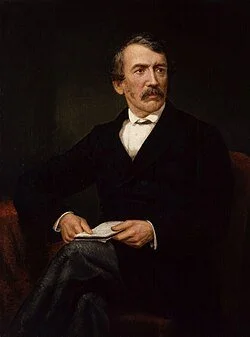
Imagine setting off on a journey into unfamiliar territory, facing deadly diseases, wild animals and the constant threat of starvation. This is the extraordinary story of David Livingstone, a man who refused to give up on his dreams, even when the odds were stacked against him.
1. How did a poor Scottish boy dream of changing the world?
Born in 1813 in Blantyre, Scotland, Livingstone grew up in a poverty-stricken family that struggled to make ends meet. At ten, he began working in a cotton mill. Despite being worn out after long working hours, he developed an insatiable thirst for knowledge and attended evening classes. His determination eventually paid off when he went on to study medicine and theology. Little did he know that his life was about to take an extraordinary turn.
2. Why did he leave everything behind and head for Africa?
In 1841, Livingstone arrived in southern Africa to spread Christianity and provide medical assistance. However, his curiosity got the better of him, and he decided to venture off the beaten track. Fascinated by the continent's landscapes and cultures, he travelled far beyond European settlements. Horrified by the brutality of the slave trade, he made it his mission to expose it. Exploration was not merely about adventure but about making a difference.
3. How did he survive a terrifying lion attack?
In 1844, Livingstone came face to face with death. While helping villagers protect their livestock, he was attacked by a lion that seized him by the shoulder and shook him violently. His companions intervened, and he narrowly escaped with his life, although his left arm was permanently damaged. Many would have called it a day, but Livingstone refused to throw in the towel and carried on exploring.
4. What breathtaking sight left him speechless?
In 1855, Livingstone encountered a spectacular waterfall. Its deafening roar and enormous clouds of mist took his breath away. Known locally as Mosi-oa-Tunya, meaning “The Smoke That Thunders”, it was named Victoria Falls by Livingstone in honour of Queen Victoria. He became the first European known to have seen it. His adventures captured the imagination of the British public, turning the once impoverished factory worker into a household name.
5. Was being a famous explorer all it was cracked up to be?
Behind the glamour of exploration lay a darker reality. Livingstone endured tropical diseases, food shortages and physical exhaustion. His ambitions also took a toll on his family life, as he spent years away from his wife and children. In 1862, his wife, Mary, died of malaria in Africa. Despite this devastating blow, Livingstone pressed on. His unwavering dedication came at a considerable personal cost.
6. Why did Livingstone suddenly disappear?
In 1866, Livingstone embarked on an expedition to investigate the source of the River Nile. However, things soon began to go downhill. His supplies ran low, he fell seriously ill, and some of his companions deserted him. For years, little reliable information about his whereabouts reached Europe. Rumours of his death made international headlines, yet Livingstone remained determined to accomplish his mission.
7. Who finally tracked down the missing explorer?
In 1871, an American newspaper sent journalist Henry Morton Stanley to get to the bottom of the mystery. After travelling through challenging terrain, Stanley finally tracked Livingstone down in Ujiji, in present-day Tanzania. According to Stanley, he greeted him with the famously understated words: “Dr Livingstone, I presume?” The encounter went down in history. Despite receiving much-needed supplies and having an opportunity to leave, Livingstone chose to stay behind.
8. How did his extraordinary adventure come to an end?
By 1873, years of hardship had finally caught up with Livingstone. Severely weakened by illness, he died in present-day Zambia at the age of sixty. His African companions buried his heart in Africa and undertook an arduous journey to carry his body to the coast. They went to extraordinary lengths to ensure his remains reached Britain, where he was buried in Westminster Abbey in 1874.
9. Was David Livingstone a hero or a controversial figure?
Livingstone left behind a complex legacy. Although he exposed the horrors of the slave trade and demonstrated remarkable perseverance, his activities also helped pave the way for European colonial expansion. Moreover, his achievements would have been impossible without African guides and companions. His story remains a fascinating example of courage, sacrifice, resilience and the consequences of pursuing a dream at all costs.
This is a list of key vocabulary and expressions from the article in order of how useful they are. The student must choose 6 items from the list to study in the lesson.
To give up
Definition: To stop trying to do something, especially because it is difficult.
Example: Despite facing numerous obstacles, he refused to give up on his dreams.
To dare
Definition: To have the courage to do something difficult, dangerous or unusual.
Example: Few explorers dared to venture into such unfamiliar territory.
A threat
Definition: Something or someone that is likely to cause harm or damage.
Example: Tropical diseases posed a serious threat to the explorers.
Sacrifice
Definition: The act of giving up something valuable or important in order to achieve something else.
Example: Achieving his ambitions involved considerable personal sacrifice.
Despite
Definition: Without being prevented by something; regardless of something. It is followed by a noun, pronoun or -ing form.
Example: Despite suffering from exhaustion, he continued his journey.
To pay off
Definition: To produce a successful or rewarding result after a period of effort.
Example: Years of hard work eventually paid off when he qualified as a doctor.
A shortage (of something)
Definition: A situation in which there is not enough of something that is needed.
Example: The explorers faced a severe shortage of food and medical supplies.
Worn-out
Definition: Extremely tired or exhausted; also used to describe something damaged through repeated use.
Example: After several days of travelling, the explorers felt completely worn out.
To set off
Definition: To begin a journey.
Example: They set off at dawn, unaware of the dangers that lay ahead.
To call it a day
Definition: To stop doing something, usually because you have done enough or are too tired to continue.
Example: After walking for ten hours, they decided to call it a day.
To struggle to make ends meet
Definition: To have difficulty earning enough money to cover basic living expenses.
Example: His parents struggled to make ends meet, so he started working at an early age.
Little did he know…
Definition: An expression used to introduce something surprising or significant that someone was unaware of at the time. It uses inversion for dramatic emphasis.
Example: Little did he know that his decision would change his life forever.
To embark (on something)
Definition: To begin a significant journey, project or new undertaking.
Example: At the age of fifty-three, Livingstone embarked on another ambitious expedition.
His achievements would have been impossible
Definition: WOULD + HAVE + PAST PARTICIPLE is a grammar structure used to describe a hypothetical past result, often referring to what would have happened if circumstances had been different. In this sentence, it suggests that without the help of others, Livingstone could not have achieved what he did.
Example: Without the support of his African companions, his achievements would have been impossible.
Off the beaten track
Definition: Away from popular, familiar or frequently visited places.
Example: We prefer travelling off the beaten track rather than visiting crowded tourist destinations.
The odds are stacked against (someone)
Definition: Someone faces unfavourable circumstances that make success unlikely.
Example: Although the odds were stacked against him, he remained determined to succeed.
To press on
Definition: To continue doing something despite difficulties, obstacles or exhaustion.
Example: Despite the worsening weather, the explorers decided to press on.
Poverty-stricken
Definition: Extremely poor and lacking basic necessities.
Example: He grew up in a poverty-stricken community with limited educational opportunities.
To get to the bottom (of something)
Definition: To discover the truth or uncover the real cause of a problem or mystery.
Example: The journalist was determined to get to the bottom of the explorer's disappearance.
To throw in the towel
Definition: To admit defeat and stop trying to achieve something.
Example: After several unsuccessful attempts, he was tempted to throw in the towel.
Insatiable
Definition: Impossible to satisfy, particularly when describing a desire, appetite or curiosity.
Example: His insatiable curiosity drove him to explore unfamiliar places.
Merely
Definition: Only or simply, used to emphasise that something is nothing more than what is stated.
Example: His expedition was not merely an adventure but an attempt to expose the horrors of the slave trade.
Not all it’s cracked up to be
Definition: Not as good, impressive or enjoyable as people claim it to be.
Example: Being a famous explorer was not all it was cracked up to be.
Unwavering
Definition: Remaining firm, constant and determined despite difficulties or pressure.
Example: His unwavering commitment to his mission inspired those around him.
Arduous
Definition: Extremely difficult, tiring and requiring considerable effort.
Example: They undertook an arduous journey through challenging terrain.
Conversation-provoking questions related to the article.
1. How did a poor Scottish boy dream of changing the world?
2. Why did he leave everything behind and head for Africa?
3. How did he survive a terrifying lion attack?
4. What breathtaking sight left him speechless?
5. Was being a famous explorer all it was cracked up to be?
6. Why did Livingstone suddenly disappear?
7. Who finally tracked down the missing explorer?
8. How did his extraordinary adventure come to an end?
9. Was David Livingstone a hero or a controversial figure?
10. Was Livingstone wrong to travel to Africa to try to convert people?
11. What’s the most frightening experience you have had with an animal?
12. What’s the most breathtaking sight you have ever seen?
13. Is your native country becoming more or less religious?
14. Has anybody ever tried to convert you to their religion?
15. What is the best way to teach your kids about religion?